Astronomy
Astronomy- A branch of science that deals with celestial objects, space, and the physical universe as a whole.
Made by Aidan, Brendan, and Conor
Topics
Ancient & Modern Astronomy
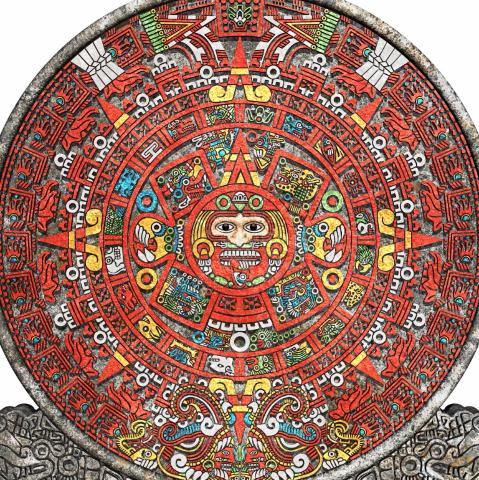
One of the greatest astronomical civilizations of the Ancient World were the Mayans. To the Mayans, astronomy was extremely important. This science reflected order in the universe, and the gods' place in it. The order showed an inherent harmony in their view of the universe.
Modern astronomy helped lead to the discovery of new planets, stars, and galaxies. For ages, humans looked up to the stars and wondered what was there in the great unknown. Not until recently were we able to launch satellites into space, map the universe, and land on the moon. Everyday, we discover new things in space, and not long ago, we found Earth-like planets not too far away.
The Big Bang
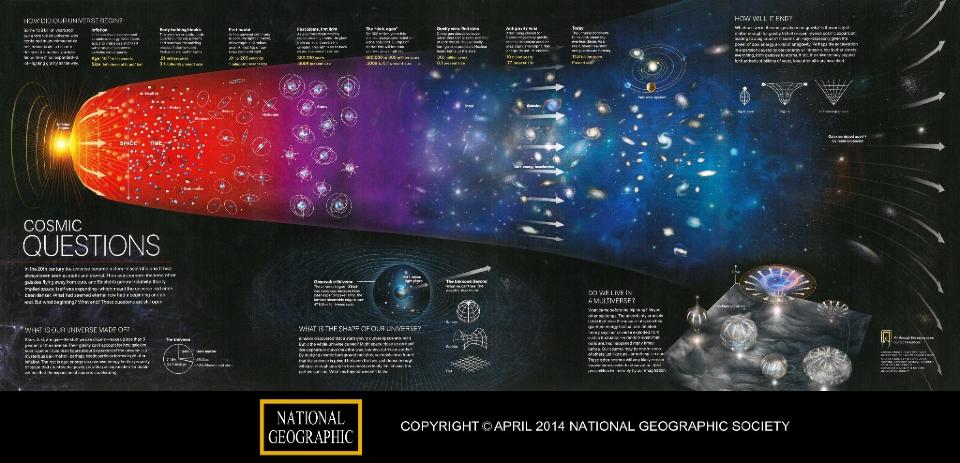
The Big Bang theory states that the universe sprang into existence as “singularity” around 13.7 billion years ago. Singularities are zones which defy our current understanding of physics. They are infinitesimally small, and infinitely hot and dense. They are unknown.
The Big Bang theory is the most popular scientific explanation for the creation of the universe. The evidence to back the theory is logical and reasonable. Some examples of the evidence are...
1)Other galaxies seem to be moving away from us at speed proportional to their distance.
2)If the universe was initially very hot as the Big Bang theory suggests, then there should be something left of the heat. In 1965, 2 radio astronomers discovered 2.725 degree Kelvin Cosmic Background radiation.
3)We’re reasonably certain the the universe had a beginning.
The Universe
The known universe is believed to be 13.7 billion years old and 27.4 billion light-years wide.
It is also believed to be constantly expanding as we observe other galaxies moving away from us. Astronomers use red shifts and blue shifts to measure the expansion rate of our universe.
Red Shift: When light shifts to a lower frequency due its movement away from us. (Suggests the some objects are moving away from us.)
Blue Shift: When light shifts to a higher frequency due to its movement towards us. (Suggests the some objects are moving towards us.)
Doppler Effect: is the change in frequency or wavelength of a wave for an observer moving relative to its source
The Big Crunch: A theory which states one of the ultimate fates of the universe. It says that if the universe's expansion rate does not exceed the escape velocity (gravitational influence), then the gravity of all its matter will eventually cause the universe to contract.
It is believed that the gravitational pull of all the galaxies would slow the expansion of the universe, but it was observed that the expansion rate is actually accelerating. A force called Dark Energy is believed to be the reason that the universe is still expanding.
Dark Energy: In physical cosmology and astronomy, dark energy is an unknown form of energy which is hypothesized to permeate all of space, tending to accelerate the expansion of the universe.
Galaxies
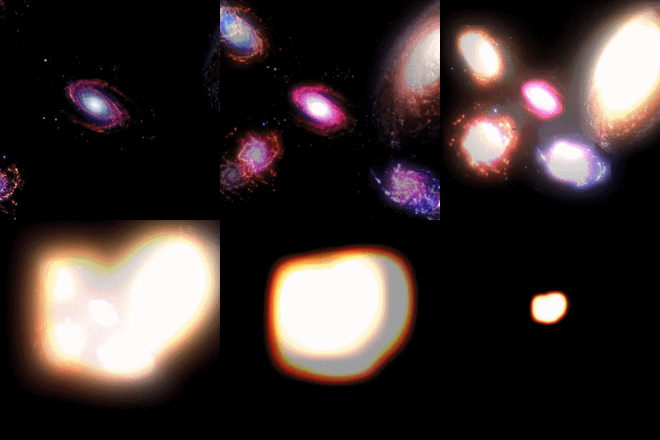
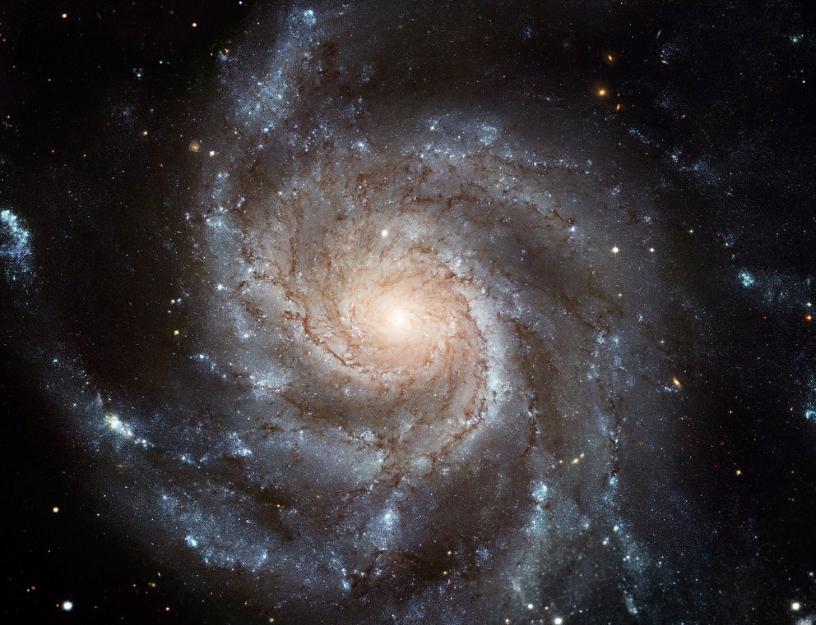
Galaxies are made up of millions and billions of stars with gas and dust, held together by the gravitational pull of the galaxy.
The sun is located in the Milky Way Galaxy, which is a spiral galaxy. Spiral galaxies are the most common types of galaxies. The other two main types of galaxies are the elliptical and irregular galaxies.
The elliptical galaxies are shaped in spherical ways and unlike spiral galaxies which contain often organization and structure, they are more without much structure, and their stars move in random orbits.
Irregular galaxies contain no particular shape that is regular. Chaotic in appearance.
Quasars are a massive and extremely remote celestial object, emitting large amounts of energy, and typically having a star like image in a telescope. It has been suggested that quasars contain massive black holes and may represent a stage in the evolution of some galaxies.
Stars
Stars are illuminate celestial bodies in space, basically like our sun.
An important thing that needs to be known about stars in terms of Astronomy is the nuclear process that combines lighter elements into heavier elements to produce the energy radiated by stars. This process is called nuclear fusion.
Fusion VS. Fission
Both fission and fusion are nuclear reactions that produce energy, but the applications are not the same. Fission is the splitting of a heavy, unstable nucleus into two lighter nuclei, and fusion is the process where two light nuclei combine together releasing vast amounts of energy.
The Life Cycle of a Star: Stars are formed in clouds of gas and dust, known as nebulae. Nuclear reactions at the center of stars provides enough energy to make them shine brightly for many years. The exact lifetime of a star depends very much on its size.
Main Sequence: The majority of all stars in our galaxy, and even the Universe, are main sequence stars. Our Sun is a main sequence star, and so are our nearest neighbors, Sirius and Alpha Centauri A. Main sequence stars can vary in size, mass and brightness, but they’re all doing the same thing: converting hydrogen into helium in their cores, releasing a tremendous amount of energy.
Supergiants: The largest stars in the Universe are supergiant stars. These are monsters with dozens of times the mass of the Sun. Unlike a relatively stable star like the Sun, supergiants are consuming hydrogen fuel at an enormous rate and will consume all the fuel in their cores within just a few million years. Supergiant stars live fast and die young, detonating as supernova; completely disintegrating themselves in the process.
Solar System
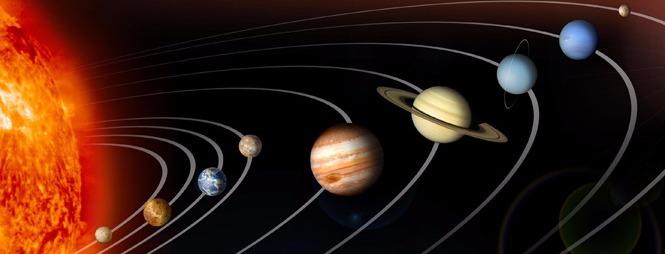
Our solar system contains 7 planets and our sun. The sun has an effect called the “wobble effect.” It simply means that the planets that orbit the sun produce a sort of wobble on the sun. It’s important to note, however, that each and every planet that orbits the sun induces some wobble of the sun. Even the Earth makes the sun wobble (a very tiny amount.)
The Sun also has things called Solar Flares. A Solar Flare is a sudden flash of brightness observed near the Sun's surface. When a Solar Flare happens, it involves a very broad spectrum of emissions, an energy release of typically 1 × 10²⁰ joules of energy for a well-observed event. The sun emits radiation that is transferred heat to earth. The heat is transferred through electromagnetic waves through earth’s atmosphere.
Planets
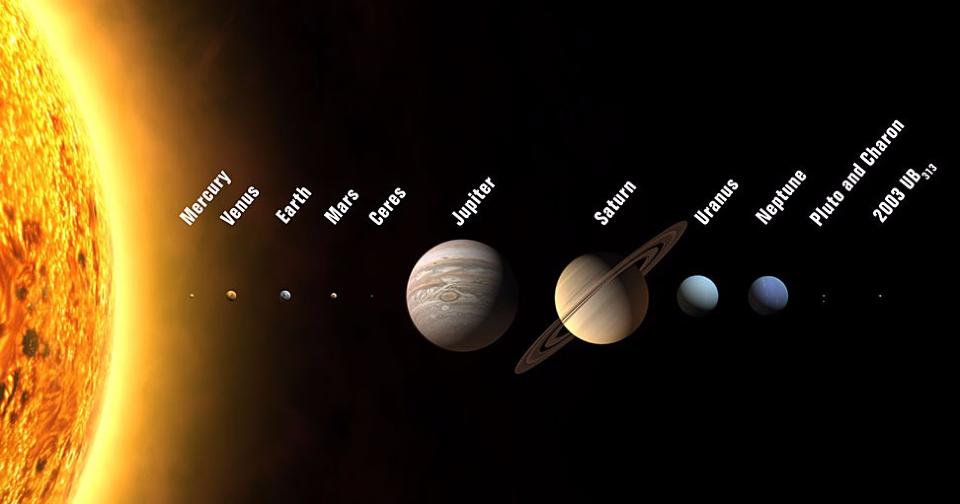
In our Solar System, there are 8 planets, 4 inner and 4 outer.
The 4 inner planets are Mercury, Venus, Earth, and Mars. These planets are called Terrestrial Planets.
The 4 outer planets are Jupiter, Saturn, Uranus and Neptune. These are called the Jovian planets. The Terrestrial planets are generally more dense than Jovian planets. Some but not all of these planets have moons. Dwarf planets, such as Pluto, lack the technical criteria that is required to be classified as a planet. (Size being the greatest one.)
Gravity
Gravity is the force by which a body of some sort draws objects towards it. Gravity keeps the planets in orbit around the sun, the moon around the Earth, and us on the Earth.
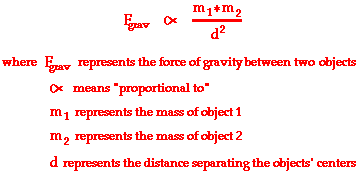
Gravity is a force created by mass, so anything with mass, also has gravity. Also, if you were to move farther away from the gravitational influence, then the gravitational force becomes weaker.
Newton's Law of Universal Gravitation: This law states that a particle attracts every other particle in the universe using a force that is proportional to the product of their masses and inversely proportional to the square of the distance between their centers.
The calculated force of gravity from the earth to the sun is... F≈6.7×10−1112×10542.25×1022≈3.6×10²²N
Miscellaneous
Comets: A celestial object consisting of a nucleus of ice and dust and, when near the sun, a “tail” of gas and dust particles pointing away from the sun. A famous comet in the U.S. is Halley’s Comet having an approximate orbit of 76 years and an eccentricity of .967. Which is very close to an elliptical orbit.
Meteors: A small body of matter from outer space that enters the earth's atmosphere, becoming incandescent as a result of friction and appearing as a streak of light.
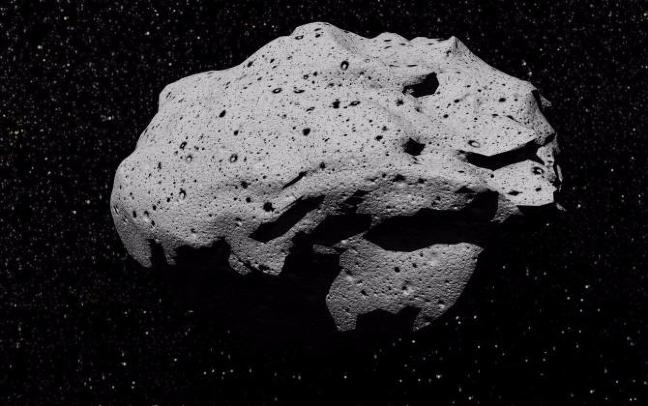
Asteroids: A small rocky body orbiting the sun. Large numbers of these, ranging in size from nearly 600 miles (1,000 km) across (Ceres) to dust particles, are found (as the asteroid belt ) especially between the orbits of Mars and Jupiter, though some have more eccentric orbits, and a few pass close to the earth or enter the atmosphere as meteors.
Credit
Ancient and Modern Astronomy-http://www.starteachastronomy.com/mayan.html
The Big Bang-
http://www.big-bang-theory.com/
The Universe-
http://www.solarsystemquick.com/universe/
Galaxies-
https://spaceplace.nasa.gov/galaxy/en/
Stars-
https://www.universetoday.com/24299/types-of-stars/
Solar System-
https://www.nasa.gov/topics/solarsystem/overview/index.html
Planets-
https://www.nasa.gov/content/planets-moons-and-dwarf-planets
Gravity-
http://www.physicsclassroom.com/class/circles/Lesson-3/Newton-s-Law-of-Universal-Gravitation